There comes a moment during the first weeks of life when many families quietly begin asking themselves the same question:
“Why is my baby crying so much when I’ve already tried everything?”
You fed them, held them, checked the diaper, tried rocking, walking, singing, adjusting the lights, the sound, the temperature — and still, the crying continues.
For many parents, this stage can feel deeply confusing and emotionally overwhelming. We tend to assume that crying must always have an immediate solution.
But infant neuroscience tells us something important:
Not all crying is a sign that something is wrong.
Sometimes, it is a sign of development.
And that is exactly what the PURPLE Period helps explain.
What is the PURPLE Period?
The Period of PURPLE Crying program, developed by the National Center on Shaken Baby Syndrome, describes a completely normal stage of early neurological development in which many babies experience intense and unpredictable episodes of crying.
The word P.U.R.P.L.E. is an acronym:
- P – Peak of crying
- U – Unexpected
- R – Resists soothing
- P – Pain-like face
- L – Long lasting
- E – Evening (more common in the late afternoon or evening)
Although emotionally exhausting, this phase typically begins around 2 weeks of age, peaks between 6 and 8 weeks, and gradually decreases by around 3 to 4 months.
So… why does it happen?
There is still no single definitive answer, but specialists believe it is connected to the rapid maturation of the nervous system.
After birth, the baby’s brain suddenly begins processing an enormous amount of stimulation:
- light
- temperature
- sound
- hunger
- movement
- separation
- fatigue
- digestion
All at once.
And because the nervous system is still immature, crying often becomes the baby’s only available way to release tension and communicate.
It does not mean you are doing something wrong.
It does not mean your baby is “spoiled.”
And it definitely does not mean you are a bad parent.
The hardest part of this stage: feeling unable to “fix it”
We live in a culture that constantly tells us we should optimize, correct, and solve everything quickly.
But the PURPLE Period does not always need a solution.
Many times, it needs support and presence.
And this is where the entire perspective shifts:
The goal is not to “stop the crying at all costs.”
The goal is to help the baby move through dysregulation while feeling safe, supported, and accompanied.
What does help during this phase
Although there is no magic formula, there are strategies supported by neonatal regulation specialists that can help the baby’s nervous system find greater stability.
Co-regulation
Young babies regulate their emotions through the bodies and nervous systems of their caregivers.
This includes:
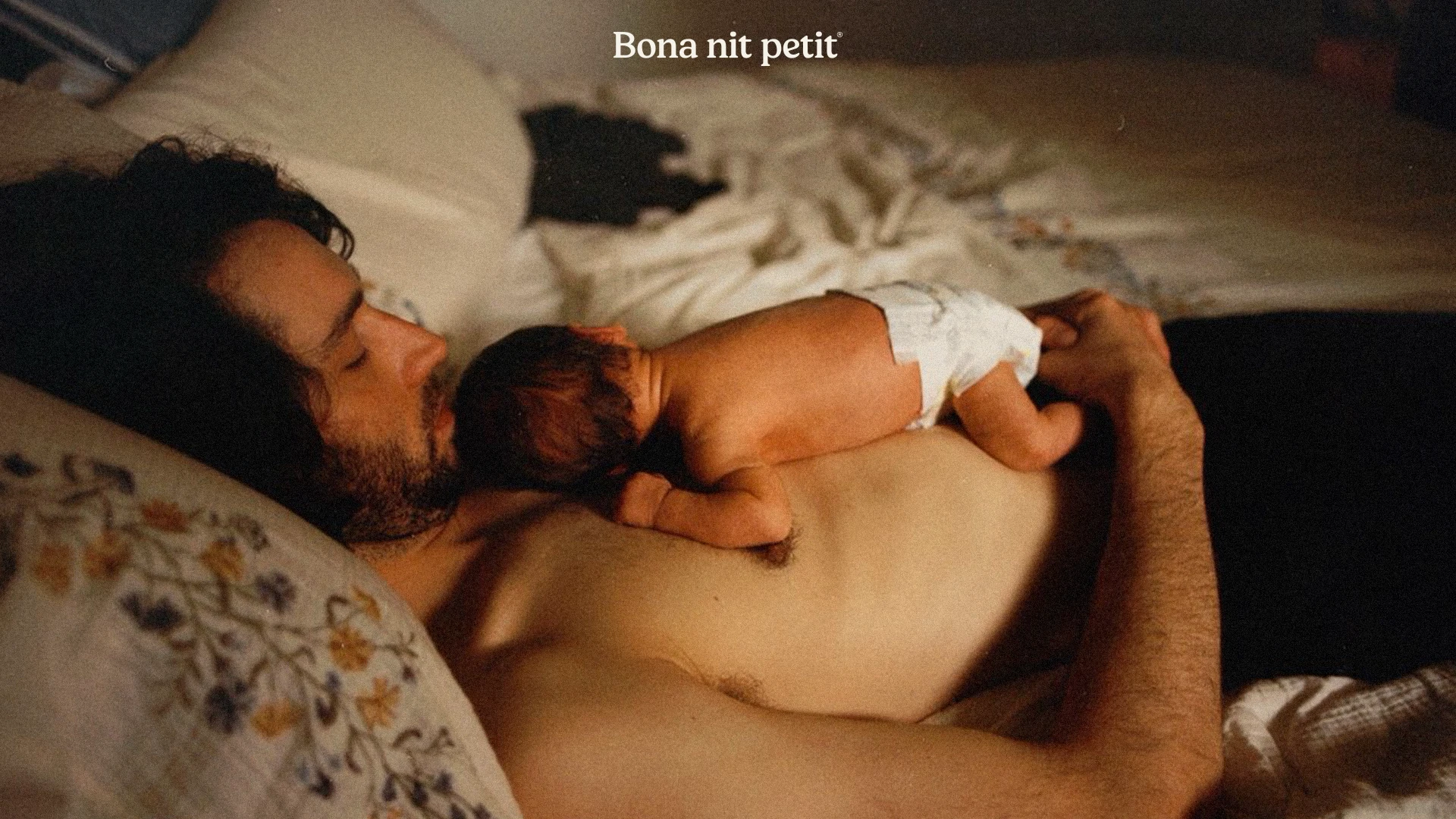
- skin-to-skin contact
- rhythmic movement
- slow breathing
- a soft, repetitive voice
- low-stimulation environments
All of these can help reduce the physiological intensity of stress.
The American Academy of Pediatrics also recommends responding sensitively to early crying as part of the development of secure attachment.
And something equally important: caring for the caregiver
One of the least discussed aspects of the PURPLE Period is the emotional impact it has on adults.
Constant crying can trigger anxiety, guilt, exhaustion, and even feelings of desperation.
That is why part of caring for a baby also includes:
- asking for help
- taking safe breaks
- alternating caregiving responsibilities with another adult
- stepping outside to breathe for a few minutes
- recognizing that feeling overwhelmed is human
Extreme exhaustion in parenting should never be romanticized.
What many families need to hear
Your baby is not trying to manipulate you.
Your baby is not “badly behaved.”
Your baby does not need you to be perfect.
What they need is an adult nervous system that, even in the middle of exhaustion, can continue communicating something essential:
“I’m here with you.”
And although this stage can feel endless while you are living through it, it does eventually pass.
The brain matures.
The crying decreases.
Rest slowly returns.
But in the meantime, understanding what is happening changes everything.
Because when we stop interpreting crying as failure, we can begin to see it for what it often truly is:
A tiny brain learning, for the very first time, how to live outside the womb.